How to become a product designer in 2026 — advice from 14 years in
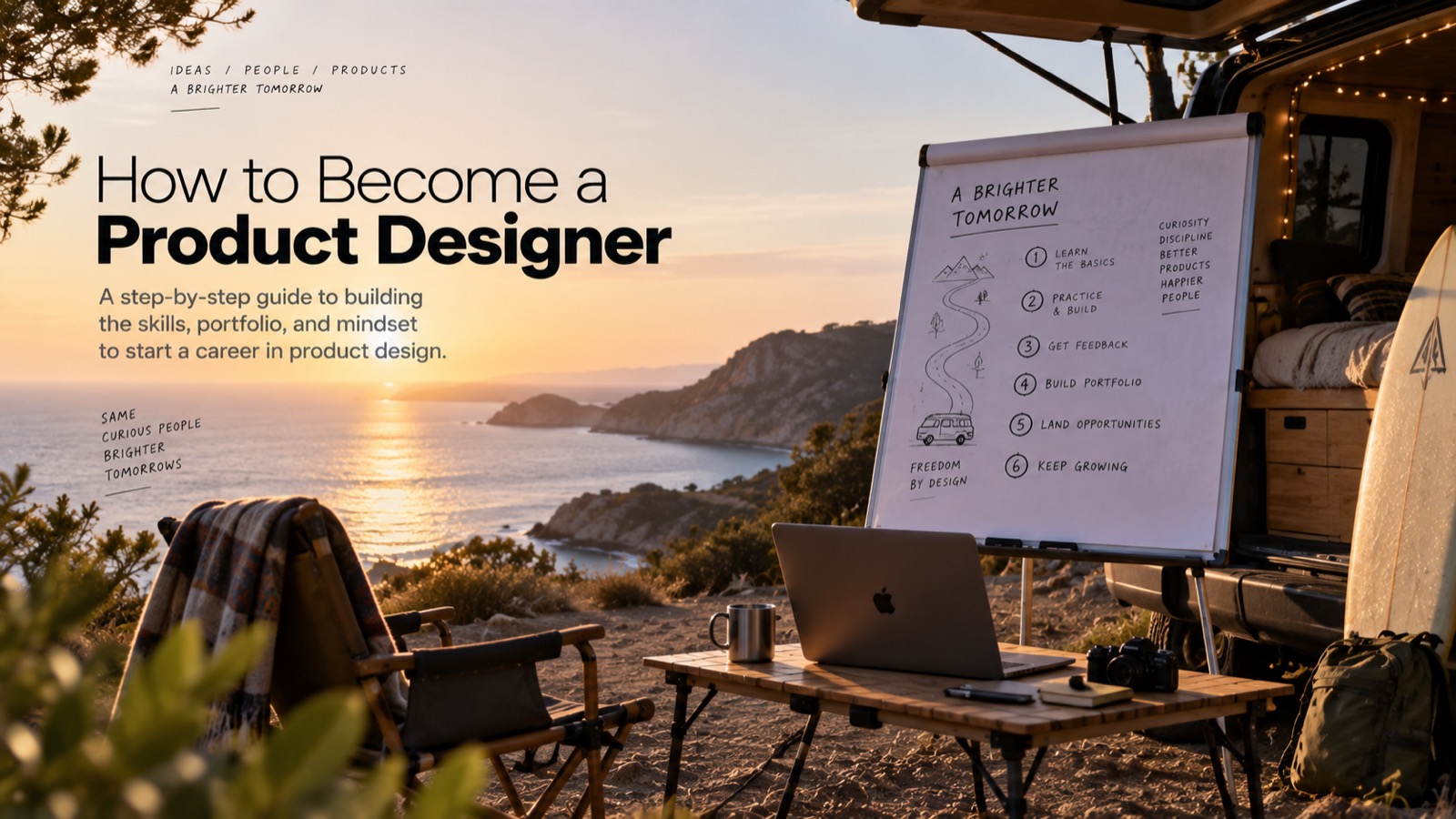
My university degree is in tourism, economics and law. I've now been a product designer for over fourteen years — through freelancing, startups, an e-commerce agency, and nearly a decade designing consumer products at DraftKings. Along the way I've mentored junior designers and watched a lot of people try to break into this field. Some made it fast. Some gave up. The difference was rarely talent.
This is the guide I wish someone had handed me in 2012 — updated for what the job actually looks like in 2026, because it has changed more in the last two years than in the previous ten.
What a product designer actually does
Forget the job-title soup (UX designer, UI designer, interaction designer). A product designer's job is simple to state and hard to do: understand a real problem people have, and shape a product that solves it — in a way the business can sustain and engineers can build.
On a normal week that means:
- Talking to users, or at least studying how they behave in the product
- Turning fuzzy problems into concrete flows, wireframes and prototypes
- Designing the final interface — and yes, visual craft still matters
- Arguing (kindly) with product managers and engineers about trade-offs
- Checking whether what shipped actually worked, and iterating
Notice how little of that is "making things pretty." The pixels are maybe a third of the job. The rest is thinking, communicating and deciding.
The skills that actually matter now
1. Craft — still non-negotiable
Hiring managers keep saying it: visual and interaction craft is the entry ticket. AI has raised the floor — generic-looking screens are now free, which means clean, considered, opinionated design stands out more, not less. Learn typography, spacing, hierarchy and motion like a musician learns scales.
2. Product thinking
The question that separates juniors from seniors is never "does this look good?" It's "why does this exist, and how will we know it worked?" Practice attaching every design decision to a user problem and a measurable outcome. Even on practice projects, write down: who is this for, what were they doing before, what changes if I succeed?
3. Communication
You will spend more time explaining design than doing it. If you can present a decision in three sentences — problem, options considered, why this one — you're ahead of most working designers.
4. AI fluency — the new requirement
This one is genuinely new. Most design teams now expect you to use AI tools in your workflow, and increasingly to understand how to design AI-powered features. You don't need to be an engineer. You do need to have built something with these tools — because "familiar with AI" on a resume means nothing, and a shipped project means everything. I wrote more about this in Designing AI products.
Do you need a degree? (No. Here's what to do instead.)
I'm living proof you don't — and in fourteen years, nobody has ever asked about my diploma. What people ask for is evidence you can do the work. Here's the path I'd take today:
- Learn the fundamentals deliberately. A couple of well-chosen courses beat a hundred YouTube videos. Study human–computer interaction basics, then copy great products — literally recreate screens from apps you admire until your hands know why they work.
- Solve real problems for real people, free if needed. A local business, a nonprofit, a friend's side project. Constraints and stakeholders are what make a project real — and "real" is what portfolios live on.
- Ship something of your own. This used to be optional. With today's AI tools, a designer can take an idea to a working product alone — I shipped two apps to the App Store this way. Nothing in your portfolio will say "I can do this job" louder than a live product, even a tiny one.
Building a portfolio when you have no experience
The rules, straight from how hiring managers actually review:
- Three to five projects, not ten. Two exceptional case studies beat six mediocre ones.
- Lead with the outcome. "Redesigned a bakery's ordering flow — online orders up 30%" is a headline. "A UX case study" is not.
- State your role honestly. If it was a team project, say exactly what you did. Reviewers can smell inflation.
- Show decisions, not process theater. Nobody wants forty sticky-note photos. They want: here was the hard choice, here's what I picked and why.
- Reviewers skim. Expect ten seconds on your homepage, two minutes on the whole site. Make your best project the first thing they see, and put the numbers in big type.
- No typos. Design leaders notice tiny incongruencies for a living. Proofread like it's part of the craft — it is.
Getting the first job
My first paid design work came through freelancing — I ground my way into the top 5% on a freelance marketplace before any company would look at me. That route still works, and it teaches you clients, deadlines and scope better than any course. The other reliable doors:
- Early-stage startups — chaotic, underpaid, and the fastest learning environment that exists. My first startup taught me more in a year than the next three years combined.
- Agencies — high volume and variety; you'll design more in a year than a product-company designer does in three.
- Adjacent roles — support, QA, marketing at a company you like, then move sideways. Slower, but it works surprisingly often.
Whichever door you take: apply with a tailored portfolio, not a bigger one. Five applications with the most relevant project first beat fifty identical ones.
The honest part: is this still a good career to enter?
You'll read that AI is ending design jobs. Here's what I actually see from inside the field: the demand shifted senior — teams want fewer people who can each do more. That's harder for juniors, no point pretending otherwise. But it also means the path in has changed rather than closed: the junior designer who can research, design, and build a working prototype with AI tools is doing what took a three-person team five years ago. That person gets hired.
Design didn't get smaller. The definition of one designer got bigger. If that excites you rather than scares you, come on in.